Leash Rules in Texas State Parks: Length, Crates and Cars
A leash rule can look simple until you are choosing between a fixed lead, a retractable leash, a crate or a quick stop in the car. For Texas state park visits, the key is to plan for a leash that meets the statewide limit and to treat crates and vehicles as separate decisions. Here is how to prepare without mistaking practical advice for a park rule.
The leash limit and what it means in practice
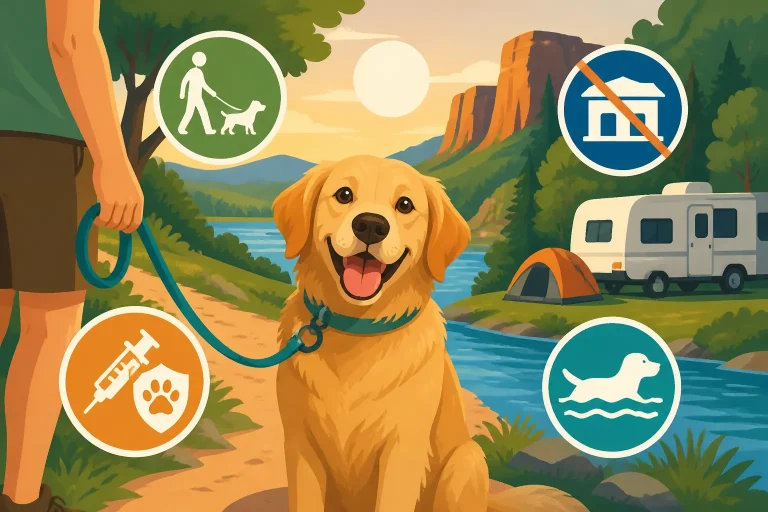
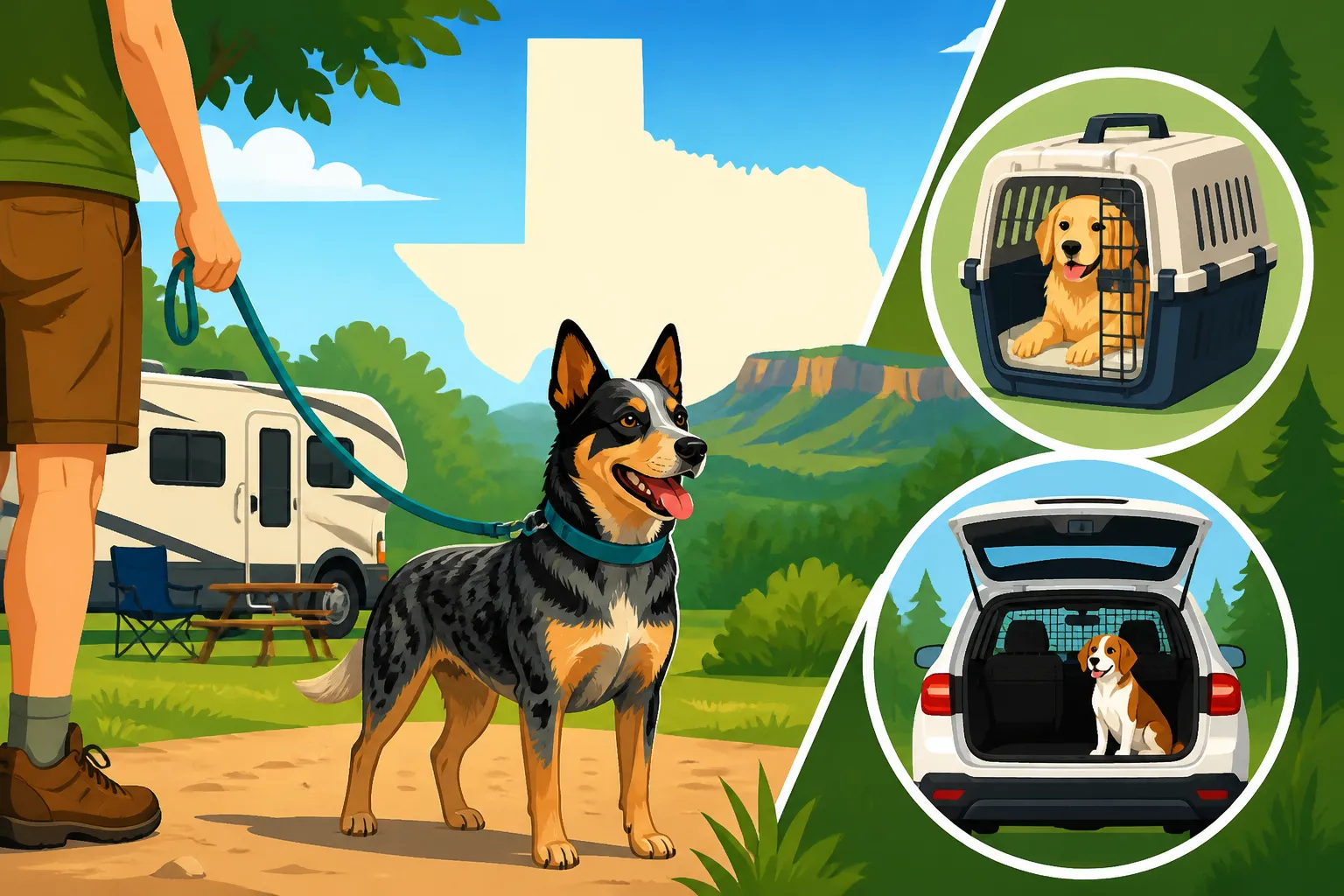
According to the Texas Parks & Wildlife Department, pets must be kept on leashes no longer than 6 feet. That is the central rule to build your park-day plan around. Before leaving home, check the leash you intend to use and make sure it meets that maximum when it is extended for use.
A fixed leash is often the simplest way to avoid uncertainty. Its working length is easy to see, and it does not depend on a locking mechanism or on how far a dog has pulled the line. A retractable leash can be less straightforward: its full reach may be longer than the permitted length even if you usually keep the handle locked close in. If you prefer one, check its maximum extension and make sure the setup you use complies with the limit.
The rule concerns the leash length, not just how close your dog happens to be walking at a particular moment. A long leash shortened by wrapping it around your hand can still be an awkward choice: it can slip, tighten unexpectedly or make it harder to manage your dog around other visitors. Choosing a leash that meets the limit without relying on improvised adjustments is more dependable.
Check the leash hardware as well as its length. A worn clip, frayed webbing or loose stitching can fail when a dog lunges or gets startled. The collar or harness should fit securely enough that the dog cannot back out of it, and the clip should attach to a sturdy point. These are practical precautions, not additional park rules, but they reduce the chance of a small problem becoming a loose-dog situation.
A leash should give you control without turning every walk into a tug-of-war. If the dog pulls hard, pauses suddenly or reacts to wildlife, a short, steady lead is easier to manage than a line that can extend farther than you expect. Practice clipping it on and walking with it before your trip, particularly if your dog is more accustomed to roaming in a fenced yard or off-leash area.
For more on how leash requirements fit alongside other pet restrictions, see Dogs in Texas State Parks: Leashes, Buildings, Swim Areas, Vaccines. If your dog uses a retractable lead, Retractable Leashes and the Texas State Park Length Limit is a useful related read.
Choose a leash that works for the park day
A good park leash is not just compliant; it also suits the places you plan to go. A visitor may move between a parking area, a campsite, a trail or a picnic spot, with other people and dogs nearby. Pick gear that makes it easy to keep your dog close and under control as the surroundings change.
Fixed leashes
A fixed-length leash is a straightforward option for many park outings. It has no reel to lock and no extra length to manage, so you can focus on the dog and the path. Consider a comfortable handle and a clip that is easy to operate, but avoid a design that makes the lead difficult to hold securely if your dog pulls.
The leash should be long enough for ordinary walking while still keeping your dog close when the path narrows or other visitors approach. The statewide maximum is the outer boundary; you may find a shorter lead more manageable in crowded places or around distractions. A shorter leash can also make it easier to guide a dog away from a dropped snack, a picnic table or a tempting patch of plants.
Retractable leashes
Retractable models can give a dog more room to sniff when the surroundings allow it, but that convenience comes with trade-offs. The line can extend quickly, tangle around legs or make it harder to bring the dog close at short notice. A locking button helps only if you can operate it promptly and the leash remains within the permitted length.
Do not assume that keeping the line mostly reeled in changes the leash’s full length. Check the product’s maximum reach and how it behaves when locked. If it can extend beyond the allowed limit, choose a different leash for the park rather than depending on an adjustment that may be easy to forget.
Harnesses, collars and backup gear
A leash is only as secure as the point where it attaches. Some dogs can slip out of a collar when they reverse direction or become frightened. A well-fitted harness may help with control, while a collar may be appropriate for a dog that is comfortable and secure in one. The right choice depends on the individual dog, its size and behavior, and how it responds to pressure.
Before setting out, check the fit and condition of the gear. Carrying a spare leash can be useful if the usual one breaks or becomes difficult to use, but make sure the backup also meets the limit. If your dog has a history of pulling, darting or reacting to other animals, practice with the chosen setup before a busy visit.
For the wider picture of how park rules can vary by location, see Pet Rules That Change From One Texas State Park to the Next. It is also worth reviewing Common Pet Mistakes at Texas State Parks, From Leashes to Lodging before planning an overnight stay.
Crates are a management tool, not a substitute for checking rules
A crate can help with transport, rest or a short period of supervision, but it does not replace a leash when you are handling your dog outside it. The statewide leash requirement still matters whenever the dog is out and being taken around the park. A crate is best treated as one part of a pet-care plan, not a way to avoid leash control.
Crates vary in how they are used. A travel crate may keep a dog secure in a vehicle, while a portable crate can offer a familiar resting place at a campsite. Before bringing one, check the specific park’s official information for any location-specific direction about pets, facilities or overnight accommodations. Do not assume that a crate is allowed everywhere simply because it is portable, or that using one automatically makes a dog acceptable in a particular building or area.
Think about whether your dog actually settles in the crate. A dog that is comfortable at home may react differently to unfamiliar sounds, people walking past or nearby animals. A crate should be stable, appropriately sized and placed where the dog can rest without being exposed to constant disturbance. Keep the dog’s needs in mind: a crate is not a substitute for water, shade, exercise or attention.
If you use a crate at a campsite, plan how you will move your dog from it to the leash without creating an escape opportunity. Have the leash ready before opening the crate, and attach it securely before allowing the dog to step out. This simple sequence can help prevent a dog from bolting toward a road, another campsite or wildlife.
Some visitors are weighing a crate against a screened shelter, cabin or other overnight option. Those facilities may have their own pet conditions, so check the park’s current official details before booking or arriving. Pets in Texas State Park Lodging: Cabins, Yurts and Shelters covers the lodging question; the leash rule remains relevant whenever you take your dog outside its resting space.
Cars and dogs: plan for more than the leash
A parked car can seem like a convenient place for a dog to wait while someone handles a task, but it deserves careful thought. Temperatures inside a vehicle can become dangerous, and conditions can change while you are away. A cracked window is not a dependable substitute for a safe, supervised setting. The more reliable plan is to arrange for the dog to stay with a responsible person or to keep the dog with you where pets are allowed.
Do not plan on leaving a dog in a vehicle simply because the stop seems brief. Delays happen: a line forms, a gate is busy, or a conversation takes longer than expected. If the dog is left unattended, you may not be able to respond promptly to distress or a change in conditions. Consider the dog’s health, age, coat, behavior and tolerance for travel when deciding whether the outing is appropriate.
A crate may help keep a dog secure during the drive, but it does not make a hot or poorly ventilated vehicle safe. Use a crate designed for travel and secure it appropriately. Provide regular opportunities for the dog to drink and take a break during the journey, and never rely on the crate as a reason to leave the animal unattended in unsafe conditions.
At the park, keep the leash ready before opening a vehicle door. A dog can slip out in the time it takes to gather gear, especially when excited by new smells or nearby animals. Attach the leash before letting the dog out, and keep a firm hold while loading or unloading. If the leash is clipped to a harness, check that the harness is fitted properly and that the clip is closed.
If your plan involves an RV, the same practical caution applies. An RV is still an enclosed vehicle, and its temperature and ventilation need attention. Do not assume that being inside a larger vehicle removes the need to monitor the dog. For RV-specific questions about leaving a pet behind, see A Dog Left in the RV at a Texas State Park and the Unattended Rule. Check the current park information for any applicable pet requirements before the trip.
Match the leash plan to trails, campsites and busy areas
A leash that is easy to manage in an open campsite may feel different on a narrow trail or in a crowded day-use area. Think through where you expect to walk and how your dog behaves when it encounters people, other dogs, wildlife, bicycles or unfamiliar sounds. A secure, manageable lead gives you more options to guide the dog calmly.
On a trail, keep the leash under control rather than allowing it to stretch across the walking space. A long or loose line can catch on vegetation, cross in front of another visitor or leave the dog too far away for a quick response. If the dog becomes excited or pulls toward something, shorten your hold smoothly and move to a safe place to let others pass.
At a campsite, keep the leash from becoming a trip hazard. It can be tempting to attach a dog to a chair or table while setting up, but the dog may pull the furniture, wrap the line around a leg or reach food and gear. Stay attentive and choose a secure way to manage the dog. If you need to concentrate on a task, ask another person to handle the leash rather than leaving the dog tied up and unattended.
At picnic areas, keep the dog close enough that it cannot reach food, dishes or another visitor’s belongings. A dog may be calm at home and still become interested in a meal or unfamiliar smells. Bring supplies to clean up after the dog and keep the animal from approaching wildlife. For more on avoiding harmful encounters, see Keeping a Dog Away From Wildlife at a Texas State Park.
Plan water and rest stops as part of the outing, especially in warm conditions. Dogs can tire or overheat, and a leash does not tell you when to stop. Bring water for the dog and pay attention to signs of discomfort, including unusual panting, slowing down or difficulty settling. Hot-Weather Water for Dogs on a Texas State Park Outing can help with planning for a warm day.
Before you leave, check the official park page for pet information, alerts and any location-specific instructions. Park pages can help you confirm which places are suitable for your plans and whether any areas are closed or restricted. If a rule is unclear, contact the park using the current details on its official website rather than relying on assumptions or an old post.
Frequently Asked Questions
Does a retractable leash meet the Texas state park rule?
It depends on the leash’s maximum reach. Check the full extension, not only how much line you usually let out. If it can extend beyond the statewide maximum, choose a leash that stays within the limit.
Can a crate replace a leash outside?
No. A crate can help with transport or rest, but it is not a leash. When taking the dog out, have a compliant leash attached and keep control of the animal.
Is it safe to leave a dog in a parked car while visiting?
A parked vehicle can become unsafe, and a brief stop can stretch longer than expected. Arrange another safe option rather than relying on an unattended car as a place for the dog to wait.
Should I check the rules for the specific park?
Yes. Review the park’s official information before setting out, particularly if you plan to use a facility, stay overnight or visit a particular area with your dog.
Sources
- Texas Parks & Wildlife Department — Park Rules — Texas Parks & Wildlife Department (checked November 22, 2026)
Disclaimer
This article is for general informational purposes only and does not constitute professional advice. Laws, prices and regulations vary by location and change over time. Consult a qualified professional for guidance on your specific situation. Texas Camping & RV is not a government agency and is not affiliated with any government agency.