Dogs in Texas State Parks: Leashes, Buildings, Swim Areas, Vaccines
Bringing a dog to a Texas state park can make a trip more enjoyable, but park access is not the same as access to every trail, building or swimming spot. The practical challenge is knowing which rules apply before you arrive. This guide explains the statewide leash and supervision basics, what to verify locally, and how to plan around facilities, water and vaccination questions.
Start With the Statewide Basics, Then Check the Park
Texas Parks & Wildlife Department says its general policy allows pets to almost all state parks, subject to park rules. That is a useful starting point, not a promise that every park or facility will suit every dog. Restrictions can vary by park and by area within a park, so confirm the rules for your destination before setting out.
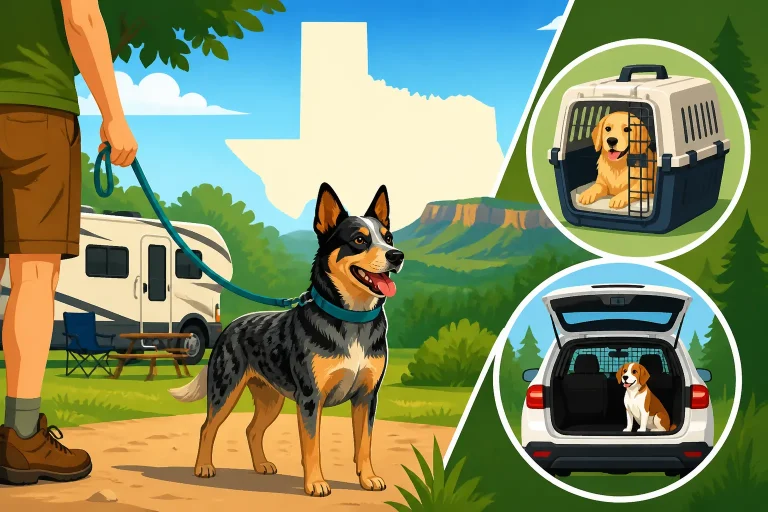
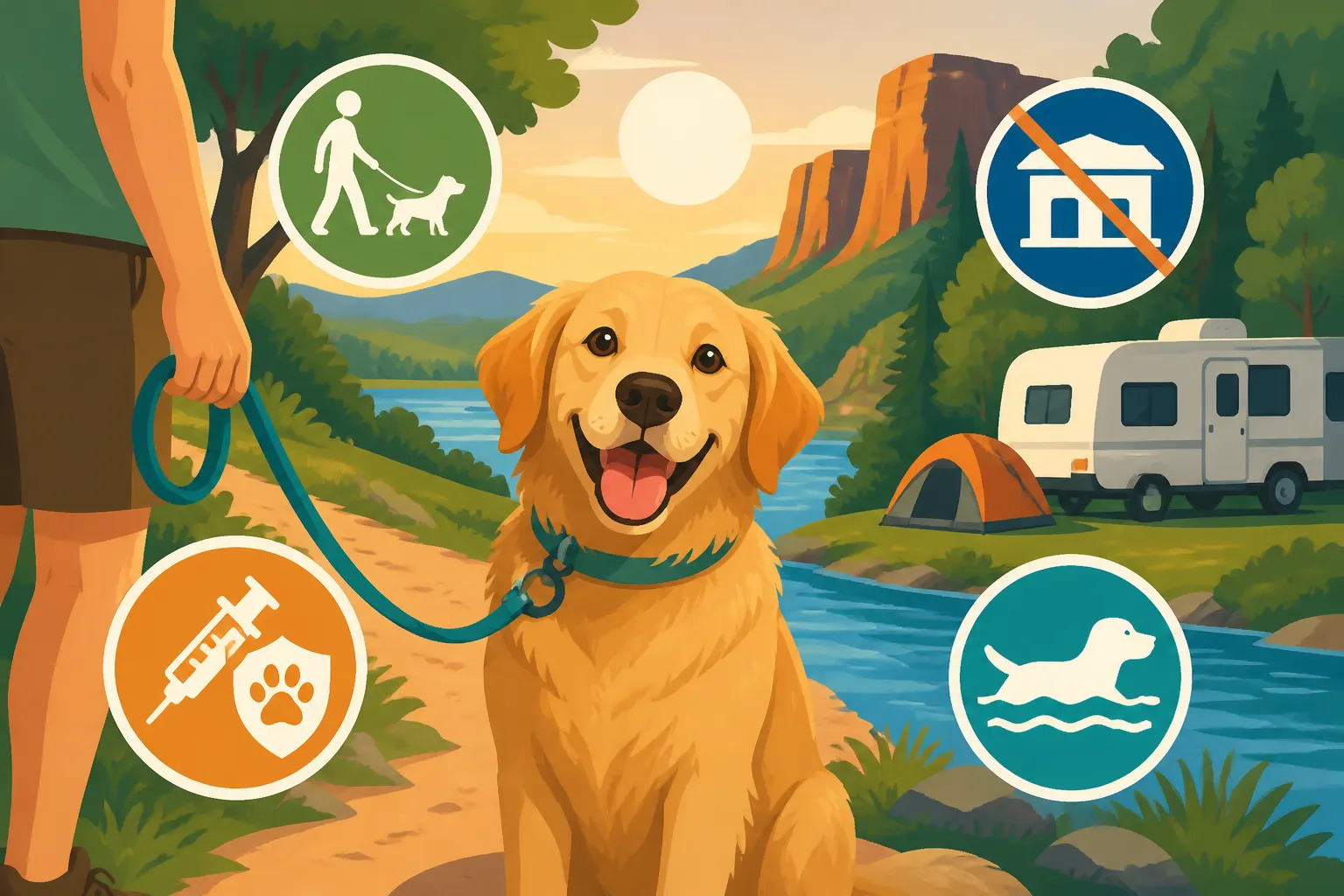
Texas Parks & Wildlife Department says pets are welcome in most Texas state parks, but must be on a leash that is 6 feet long or shorter and cannot be left unattended. The department also says pets must be on a leash, in a car, or in a crate at all times, and a leash can be no longer than 6 feet.
Those requirements shape the whole visit. A dog cannot be allowed to wander around the campsite, left alone while people go inside a facility, or tied up and forgotten while the group heads off. A leash is for keeping the dog under control, not a substitute for someone staying with it. If your plan involves a place where a dog cannot accompany you, work out care and supervision before arrival.
The broad policy also does not answer every park-specific question. A trail might have conditions that differ from a developed day-use area. A swimming area may have its own restrictions. A cabin, screened shelter or campground loop may have rules beyond the general pet policy. Check the park’s official information for the places you actually plan to visit, not just the park’s general welcome message.
A useful way to think about the rules is to separate them into layers:
- General pet rules: Whether pets are allowed at the park and the leash and supervision requirements.
- Area rules: Whether dogs are allowed on a particular trail, beach, swimming area, or other facility.
- Lodging rules: Whether a dog can stay in a particular cabin, shelter or other overnight space.
- Trip-day conditions: Temporary closures, alerts or other directions that may affect where you can go.
If one source seems to give a broad answer and another lists a specific restriction, treat the specific area rule as important and ask the park to clarify before you rely on access. Pet Rules That Change From One Texas State Park to the Next offers more context on why an answer that works at one park may not work at another.
For the most dependable plan, look up the official park page and read the details relevant to your visit. If the answer is unclear, use the official website to find current contact information for the park. Do not assume a rule from a previous visit still applies, or that a rule at a nearby park is the same.
Make the leash easy to use
A leash that meets the length limit is only useful if it is comfortable to hold and gives you control around other visitors, wildlife and distractions. Before leaving home, check that the clasp works, the handle is secure and the leash is not damaged. A standard fixed-length leash can be easier to manage than a retractable one in crowded areas; either way, the required maximum length still applies.
If your dog is excited by other dogs, children, bikes or wildlife, allow extra room in your route and keep the leash short enough for the situation. Do not let the dog approach someone just because the other person appears friendly. Some visitors are nervous around dogs, and some dogs are uncomfortable with close greetings.
For details about leash length, crates and what counts as keeping a dog under control, see Leash Rules in Texas State Parks: Length, Crates and Cars. If you use a retractable leash, Retractable Leashes and the Texas State Park Length Limit can help you think through how the leash’s full extension affects compliance and control.
Keep the dog with a responsible person
“Not left unattended” matters beyond the campsite. A dog waiting alone in a vehicle, tied up outside a building, or left at a picnic table while the group goes elsewhere still needs a plan. Texas weather can also make a vehicle an unsafe place to leave a dog, even if the stop seems brief. Plan outings so someone can stay with the dog, or choose an activity and route where the dog can accompany the group.
A crate is one of the allowed ways to contain a pet under the statewide guidance, but it does not cancel the supervision requirement. Use a crate only where it is permitted and appropriate, and do not treat it as permission to leave the dog alone. When your group needs to split up, decide in advance which adult will remain with the dog or whether someone will skip that activity.
Buildings, Lodging and Places Your Dog May Not Enter
The statewide building restriction is direct: Texas Parks & Wildlife Department states that pets are not permitted in any buildings at Texas State Parks. Do not plan on bringing a pet dog into a park building to escape the weather, use an indoor facility or wait while another person handles an errand.
This rule is easy to overlook when the dog is allowed elsewhere at the park. A dog-friendly campsite or trail does not mean the dog can go into a building. If your itinerary includes a building visit, such as checking in or going inside for information, decide who will stay outside with the dog. The rule also makes it important to handle check-in logistics before the group arrives, especially if one person is traveling alone with a dog.
For an overnight stay, do not assume that the park’s general pet policy answers whether dogs may stay in a particular cabin, yurt or screened shelter. Lodging rules can be specific to the accommodation, and permitted areas may differ. Check the official listing and rules for the exact space before booking. If the terms are unclear, confirm them directly through the park’s official contact details rather than relying on a general description.
The same care applies to other indoor spaces. Do not infer that a dog is allowed in a restroom, visitor area, store or enclosed facility just because it is on a leash and welcome outdoors. The stated rule covers park buildings generally, so make a plan for any building your group expects to use. The related article Why Dogs Stay Out of Park Restrooms, Cabins and Swim Beaches can help with planning around facilities, while Are Dogs Allowed at Texas State Park Screened Shelters? focuses on a specific kind of overnight stay.
Service animals are a separate question
A pet dog and a service animal are not interchangeable categories. If you are traveling with a service animal, do not assume that a rule written for pets resolves the animal’s access. Check the park’s official information and the relevant accessibility guidance for the specific setting. The article Service Dogs in Texas State Park Buildings, Trails and Lodging addresses that distinction in more detail.
For a household traveling with both a service animal and a pet, verify the requirements for each animal separately. Keep the animals’ roles clear when asking the park for guidance, and explain which facility or activity you are asking about. A response about a pet-friendly campsite may not resolve access to a building or a lodging space.
Build the route around permitted areas
Before you leave, sketch out the basic day: where the group will park, where you hope to walk, whether you expect to swim, and which facilities you may need. Then mark the portions where the dog can join and the points where a person may need to stay with it. This avoids reaching a building or restricted area and only then discovering that the group has no workable plan.
When there is no suitable place for the dog to wait with a person, consider changing the itinerary. That may mean taking turns on an activity, choosing an outdoor alternative or leaving the dog at home. It is better to make that decision before the drive than to improvise in a crowded day-use area.
Trails, Day-Use Areas and Shared Spaces
Dogs and people share trails, picnic areas, campsites and parking areas. A leash helps you manage close encounters, but good judgment matters too. Keep the dog near you on narrow trails and in busy places. Give other visitors room to pass, and step aside where it is safe rather than expecting everyone to move around your dog.
Before hiking, verify whether dogs are permitted on the specific trail you intend to use. The general park policy does not establish that every trail is open to pets. Look for the park’s trail information and any posted restrictions when you arrive. If conditions or signs differ from what you expected, follow the current onsite direction and adjust your route. Dogs on Trails at Texas State Parks: Checking Before You Hike can help you prepare for that part of the visit.
A trail plan should also fit the dog, not just the people. Consider the surface, shade, distance, weather, water access and how your dog reacts to other visitors. A route that seems manageable for a person may be tiring for a dog, especially in heat or on rough ground. Be ready to turn back rather than pushing on to meet a planned destination.
Campsites and picnic areas
At a campsite or picnic area, keep the dog leashed and close enough that you can respond quickly. Do not allow it to roam into another party’s site or approach a neighboring table. The dog may be friendly, but other campers may be eating, resting, caring for children or managing their own pets.
Pick up after your dog and dispose of waste appropriately. A clean site is more comfortable for everyone and reduces the chance of attracting wildlife. Keep food and trash managed according to the park’s posted instructions; do not assume that food scraps or pet food can be left outside because the dog is nearby.
If your campsite is close to a trail or shared road, watch for passing bikes, vehicles and walkers. A dog suddenly crossing a path can create a problem for the dog and for others. Keep the leash in hand rather than attaching it to a picnic table or campsite fixture while you turn your attention elsewhere.
When choosing a site, think about whether the dog can settle comfortably without being exposed to constant foot traffic. Bring a familiar bed or mat if that helps the dog rest, but keep it within your designated camping space. Make sure the dog has shade and fresh water, and take breaks from the campsite if the dog is becoming restless.
Wildlife and other dogs
A park visit can put a dog near wildlife it does not encounter at home. Keep the leash under control and do not let the dog chase, corner or approach animals. Even a dog that normally responds well can react differently to a sudden encounter. Leave wildlife an escape route and move away calmly if your dog becomes excited.
Do not encourage your dog to investigate animal burrows, carcasses or food scraps. These can put the dog at risk and disturb wildlife. Secure snacks and pet food when you are not actively feeding your dog, and keep waste contained. Keeping a Dog Away From Wildlife at a Texas State Park covers ways to reduce unwanted encounters.
Other dogs also need space. Ask before allowing a greeting, and respect a person’s choice to keep their dog away. If either dog is pulling, barking or showing signs of discomfort, create distance rather than trying to make the introduction happen. On crowded trails, passing without stopping is often the calmer option.
If you are unsure whether the planned outing suits your dog, use the official park map and activity information to choose a shorter or less crowded route. A flexible plan is better than forcing a dog through a busy area when it is tired or overstimulated.
Swimming Areas, Shorelines and Water Safety
Do not assume that a dog allowed in a state park is automatically allowed in the water or on every swimming beach. Swimming access can depend on the park and the designated area. Check the official park information for the specific swimming spot and read signs at the site before approaching the water with your dog.
Keep a dog out of areas marked as restricted, and do not let it enter the water just because other parts of the shoreline appear open. A swimming beach may be managed differently from a general shoreline, boat ramp or trail beside the water. If the park page does not make the boundary clear, ask park staff using current contact details from the official website.
Even where dogs are allowed near water, the dog’s presence can affect other visitors. Some people are uncomfortable around dogs, and children may not know how to behave around an unfamiliar animal. Keep the dog leashed, give swimmers room, and avoid letting it run through towels, picnic setups or crowded access points.
Decide whether water is right for your dog
A dog that enjoys water still needs close supervision. Watch its energy and confidence, and do not pressure it to swim. Conditions can change along a shoreline, and a dog may tire or become unsettled more quickly than expected. If your dog is unfamiliar with the setting, a brief, calm introduction is safer than assuming it will behave as it does at home.
Bring drinking water for your dog rather than relying on lake, river or pond water. Natural water can contain hazards that are not obvious, and park conditions may vary. Keep the dog from drinking water with visible contamination, strong odors or unusual surface conditions, and move away if you see an advisory or warning. Follow any posted health guidance.
After time near water, check your dog for discomfort, irritation or debris in its coat and paws. Dry the dog as needed before settling in the vehicle or campsite, and keep it from shaking water onto other visitors or their belongings. A towel and a spare leash can make the transition back from the shoreline easier.
If swimming is a key part of the trip, confirm dog access before you choose the park. The article Swimming at Texas State Parks: Designated Areas and Their Hours can help you plan the human swimming portion of a visit, while park-specific pet information determines whether your dog can accompany you to the relevant area.
Have a plan if dogs are excluded
If the designated swim area does not allow your dog, do not leave it unattended nearby or tied up while the group swims. The supervision rule still applies. Instead, have someone stay with the dog outside the restricted area, arrange turns, choose an activity the whole group can do together, or make a different trip plan.
For solo visitors, this can change the day substantially. If nobody can stay with the dog, swimming may not be practical during that visit. Check access before you go so you can decide whether the destination still fits your plans.
Vaccines and Health Questions to Confirm
Do not treat general permission to bring a dog as a complete answer about vaccination documents or health requirements. Verify current requirements with the park before travel, especially if you are visiting with a young dog, a dog with a health condition or a dog whose records are incomplete. The park’s official information is the right place to check for any stated requirement.
It is also useful to distinguish between a park rule and a sensible preparation step. Keeping vaccination records accessible can help you answer questions and manage an unexpected veterinary visit, but carrying a record is not the same as a rule requiring proof at the gate. Do not assume a specific document, vaccine or deadline is required unless the official park information says so.
For a clear answer, ask about the exact situation. You might ask whether the park requires proof of vaccination, whether a particular activity has additional conditions, or whether a health notice affects access to an area. A broad question such as “Are dogs allowed?” may not bring up paperwork or temporary conditions.
If you are looking for information about rabies documentation, see Do You Need Rabies Proof for Your Dog at a Texas State Park?. Use it as a starting point, then confirm the current requirement with the official park source before leaving. Requirements can change, and a general answer may not cover the destination or circumstance you have in mind.
Check your dog’s condition before the drive
A park outing may involve travel, unfamiliar sounds, crowds, uneven ground and changes in routine. Before leaving, consider whether your dog is well enough for the planned trip. If it is unwell, recovering from an injury or unusually stressed, ask a veterinarian whether an outdoor visit makes sense.
Pack any medication your dog normally needs and keep it accessible. Bring food and drinking water that your dog is used to, along with waste bags, a secure collar or harness and a leash that complies with the park’s limit. If your dog has a known sensitivity or needs breaks, plan the route around that rather than hoping conditions will work out.
Keep your dog’s identification current and make sure you can control it if startled. A loud sound, wildlife sighting or sudden movement may cause a dog to bolt even if it is usually calm. A secure fit and a leash held by an attentive person help reduce that risk.
A Practical Plan Before You Leave Home
A dog-friendly park trip works best when you confirm access and build a realistic itinerary before departure. Use the official page for the destination, then check the details that match your plans. The following checklist keeps the key decisions in one place:
- Confirm that pets are allowed at the park and review its specific rules.
- Check the leash and supervision requirements and bring suitable equipment.
- Confirm whether the dog can accompany you on your intended trails and outdoor activities.
- Check building, lodging and swimming-area restrictions separately.
- Ask the park about any vaccination or documentation requirement that is unclear.
- Review park alerts and conditions before leaving, then follow signs and staff directions on arrival.
- Plan who will stay with the dog if part of the group enters an area where pets are not permitted.
- Pack drinking water, food, waste bags, a towel and any medication the dog needs.
- Keep the dog leashed and supervised throughout the visit.
- Have a backup activity or route if a planned area is unavailable to pets.
For destination research, Researching a Texas State Park Trip: Park Pages, Maps and Alerts is useful for finding park-specific information. If the visit is your first overnight trip, Planning a First Texas State Park Trip, From Entry to Checkout can help with the broader logistics.
Match the trip to your dog
A park can be pet-friendly without being a good fit for every dog on every day. A dog that struggles with heat, crowds, unfamiliar animals or long walks may do better with a short visit during a quieter period. A confident, active dog may enjoy a longer outing, but still needs water, rest and close supervision.
Consider the length of the drive and what will happen after arrival. If the dog has been in the vehicle for a while, give it a calm chance to settle before starting a strenuous walk. Keep a flexible schedule so you can pause or leave if the dog is tired or anxious.
For a hot-weather outing, plan around shade and frequent water breaks. Do not expect the dog to tolerate the same pace as the people in your group. The article Hot-Weather Water for Dogs on a Texas State Park Outing offers additional planning considerations for warm conditions.
If the dog is uncomfortable around other dogs or visitors, avoid the busiest shared spaces when possible. Keep greetings optional, allow room on trails and do not let the dog approach people who have not invited contact. A shorter, quieter trip can be more enjoyable than trying to cover every planned activity.
Prepare for a change of plan
Park conditions, closures and posted restrictions can affect access to a trail or facility. Check alerts before leaving and look again when you arrive. If a sign or staff direction conflicts with your original plan, follow the current instructions and choose another permitted activity.
A backup plan might be a different trail, a picnic in a pet-appropriate area or a shorter visit. If the dog cannot join the activity that matters most to your group, decide whether taking turns is workable. Do not leave the dog alone while the group continues with the original plan.
Think through the return trip, too. Keep the dog secure in the vehicle, offer water and avoid letting it climb into a hot car without proper precautions. Take a moment before departure to check that you have the leash, identification, waste bags and any belongings you brought into the park.
The key is not to assume that “dogs allowed” means “dogs allowed everywhere.” Confirm the rules for the park and the exact areas you plan to use, keep your dog leashed and supervised, and be prepared to adjust the day. That approach protects your dog, respects other visitors and makes it less likely that a missing detail will derail the trip.
Frequently Asked Questions
Are dogs allowed in Texas state parks?
Texas Parks & Wildlife Department allows pets at almost all state parks, but individual park and area rules apply. Confirm the destination’s requirements before leaving.
How long can a dog’s leash be?
Texas Parks & Wildlife Department says the leash must be 6 feet long or shorter. Keep the dog leashed and supervised during the visit.
Can I bring my dog into a park building?
No. Texas Parks & Wildlife Department says pets are not permitted in Texas State Park buildings. Plan for someone to stay with the dog when you need to enter a building.
Does my dog need vaccination proof?
Check with the park for current requirements. Do not assume that proof is required, or that a particular document is enough, without confirming the official information.
Sources
- Texas Parks & Wildlife Department — State Parks FAQs — Texas Parks & Wildlife Department (checked November 22, 2026)
- Texas Parks & Wildlife Department — PWD BK P4000 0000AA (PDF) (checked November 22, 2026)
- Texas Parks & Wildlife Department — Park Rules — Texas Parks & Wildlife Department (checked November 22, 2026)
Disclaimer
This article is for general informational purposes only and does not constitute professional advice. Laws, prices and regulations vary by location and change over time. Consult a qualified professional for guidance on your specific situation. Texas Camping & RV is not a government agency and is not affiliated with any government agency.