Group Camps, Lodges and Halls Across Texas State Parks
Planning a park gathering gets complicated when people need different sleeping arrangements, shared space, or room for RVs. Texas state parks offer group facilities that can serve very different purposes, from bunkhouse-style stays to halls and campsites. The key is to match the facility to your group’s needs, then confirm what the listing includes and how the reservation works.
Understand What “Group Facility” Can Mean
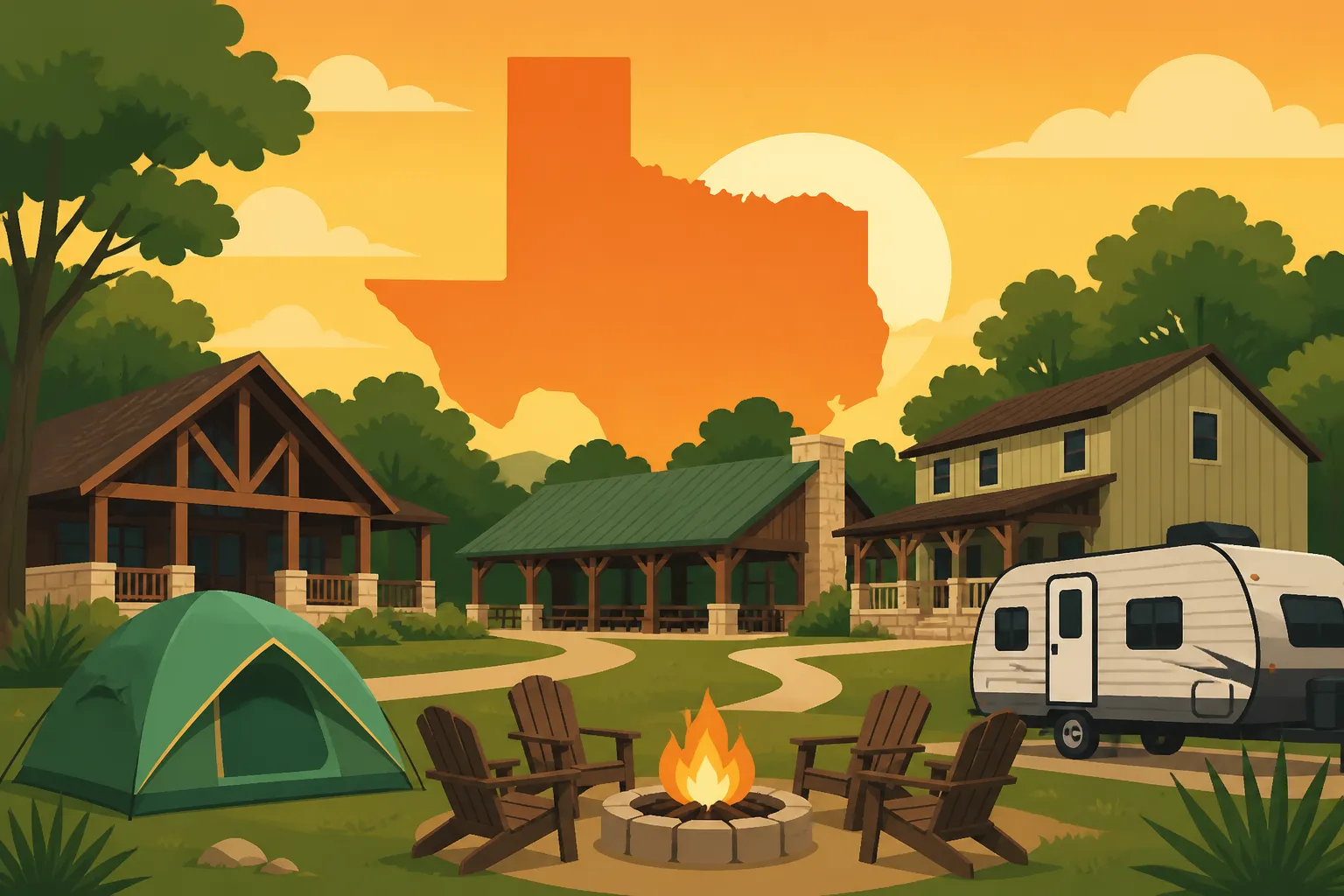
“Group camp” can describe a place to sleep, a shared recreation area, or a combination of facilities. A lodge or bunkhouse may give the group indoor sleeping space, while a hall or pavilion may provide a place to gather without providing beds. Some group areas also include campsites, which can be useful when people bring different kinds of camping equipment.
These labels are a starting point, not a complete description. Before settling on a park, look at the facility listing and identify what the rental actually covers. Check whether it includes sleeping space, a kitchen, a bathroom, a gathering room, outdoor seating, campsites, or hookups. Then confirm which features are shared and which are part of the rental itself.
A group facility may suit a family reunion, club outing, youth trip, or gathering of friends, but the best fit depends on the group’s routine. A lodge can help when people want a common indoor base. A group campsite may work better when most participants plan to tent camp or bring RVs. A hall or pavilion can be useful when the group needs a meeting or meal space but plans to sleep elsewhere.
The names can also be easy to misread. A hall is not automatically a lodge, and a facility with a kitchen is not necessarily stocked with cookware or supplies. Similarly, a group area with campsites may not include the kind of sleeping quarters your group needs. Confirm the details directly on the park’s official listing rather than relying on the facility name alone.
For an overview of the camping options available across the system, see Camping in Texas State Parks: Tent Pads, Hookup Sites and Cabins. If the group is considering a roofed stay rather than a campsite, Screened Shelter, Cabin or Yurt: Picking a Roof at a Texas State Park can help clarify how those lodging choices differ.
Compare the Main Facility Types
The practical difference between a group campsite, lodge, hall, and pavilion is what the group can do at the facility and what it still needs to bring or arrange elsewhere. Use this comparison to narrow the options, then verify specifics with the park.
| Facility type | Often worth considering when | Details to confirm |
|---|---|---|
| Group campsite | Many participants plan to tent camp or arrive in recreational vehicles | Site layout, hookups, restroom access, parking, and whether a gathering space is included |
| Bunkhouse or lodge | The group wants shared indoor sleeping space | Beds, sleeping capacity, kitchen and bathroom access, linens, and house rules |
| Recreation hall | The group needs a common indoor place to gather | Whether sleeping is included, available furnishings, kitchen access, and how the space is arranged |
| Pavilion | The group wants an outdoor gathering area | Shade, seating, nearby restrooms, weather exposure, and whether camping is part of the rental |
| Combined group area | The group wants to keep sleeping and gathering close together | Which amenities belong to the rental and which are separate facilities |
A group campsite can be a good choice when participants are comfortable bringing their own sleep systems and setting up camp. A lodge can reduce the amount of camping gear needed, though guests may still need to bring bedding, towels, food, or cooking equipment. A hall or pavilion is a gathering space; do not assume that reserving it also provides sleeping quarters or nearby campsites.
The amenities matter as much as the label. For an RV group, electric service and water hookups may affect which sites are suitable. Tent campers may care more about the walk between a site and shared restrooms or the gathering area. A group that plans to cook together should establish whether cooking facilities are included and what equipment is available.
Gathering space also affects how a group spends time together. A hall can provide shelter from sun or rain, while a pavilion offers an outdoor setting. Neither description by itself tells you whether tables, chairs, power, a kitchen, or other equipment are included. Ask about each item rather than treating it as standard.
A few Texas examples show how much the options can vary. According to Texas Parks & Wildlife Department, Garner’s Cypress Springs Group Camp is a dining hall with five bunkhouse shelters. According to Texas Parks & Wildlife Department, Palo Duro Canyon’s Wolfberry group camp has nine campsites with 30/50-amp electric and water hookups. These serve different needs: one listing describes a dining and bunkhouse arrangement, while the other describes a group camping area with hookups.
According to Texas Parks & Wildlife Department, Bonham’s group area has six campsites, each with a picnic table, upright grills, and a water spigot. That feature list is useful for planning, but it does not answer every question a group might have about restroom access, the location of the sites, or the conditions of the rental. Check those details in the park’s current facility information.
Match the Facility to Your Group
Start with the people and the way they expect to spend the trip, not with the most impressive-sounding facility name. A group with young children, older relatives, tent campers, and RV travelers may need a different setup from a group of experienced campers who are comfortable sharing a basic campsite. The goal is to find an arrangement that works for the least flexible needs without assuming everyone wants the same kind of stay.
Consider sleeping arrangements
Ask each household or participant how they plan to sleep. Some may prefer a bed indoors, while others may bring tents or use an RV. If the group will split between a lodge and nearby campsites, confirm that those facilities are close enough for your plans and available for the same dates. Do not assume that a group lodge includes additional camping spaces, or that a campsite reservation provides access to a nearby building.
For a lodge or bunkhouse, confirm the sleeping setup before assigning rooms or asking people to bring bedding. A listing’s capacity does not necessarily tell you how many separate sleeping areas there are or what kind of beds are provided. Check whether people share rooms, whether there is space for personal gear, and whether guests need to supply linens. Beds and Sleeping Space in Texas State Park Cabins and Yurts offers useful questions to consider when the group is weighing overnight accommodations.
If the facility has a kitchen, ask what “kitchen” means for your trip. It may describe the room or basic fixtures without answering whether cookware, dishes, refrigeration, or small appliances are supplied. If the group expects to cook meals together, confirm what equipment is available and plan a backup for anything that is not included. For broader packing considerations, see Linens and Cookware: What Texas State Park Lodging Doesn’t Supply.
Think through the group’s shared routine
A gathering area works best when it supports the activities the group actually plans to do. A reunion may need space for meals and conversation. A youth outing may need a place to give instructions, organize equipment, and regroup. An RV club may mainly need camping space with the appropriate services. A facility that looks spacious online might not match the group’s needs if the rental does not include the expected seating, shelter, or amenities.
Talk through the daily routine before choosing. Where will people gather for meals? Where will someone go for quiet time? Will the group need an indoor place during poor weather? How will people move between their sleeping area and the shared space? These questions can reveal that a single large facility is not the simplest option. Separate campsites and a shared gathering area may work better, depending on what is available at the park.
Accessibility and mobility needs deserve attention early, not as a last-minute detail. Ask the park about the route between parking, sleeping space, restrooms, and the gathering area, as well as any features relevant to your participants. A facility description may not explain slopes, surface conditions, or the distance between buildings. Accessibility at Texas State Parks: Campsites, Cabins and Restrooms can help frame what to check.
Account for different camping styles
A mixed group might include tent campers, people sleeping in vehicles, and RV travelers. Their needs can differ even when they want to stay near one another. Confirm whether the group area can accommodate the intended equipment, and check the listing for site-specific details rather than assuming every site has the same layout or services.
If some participants prefer a more independent stay, nearby individual campsites or other lodging might be worth considering. Before splitting the group across facilities, check whether the sites are close enough for your plans and whether the park can accommodate the arrangement. Splitting a Big Group Between a Cabin and Nearby Campsites covers the practical questions involved in combining lodging types.
For youth groups, plan around supervision, transportation, and the organization’s requirements as well as the park’s facility details. Confirm who is responsible for participants, how adults will be assigned, and whether the chosen site gives the group a manageable place to gather. The requirements may differ by organization, so check those separately from the park’s facility listing. See Youth Groups at Texas State Parks: Passes, Group Camps and Consent and Planning a Scout Troop Campout at a Texas State Park for related planning considerations.
What Texas Examples Tell You About Planning
The facilities listed by Texas Parks & Wildlife Department illustrate why groups should compare amenities rather than choose by name alone. A bunkhouse-and-dining setup, a group camping area with hookups, and a rental pavilion are different kinds of solutions. They may all work for groups, but not for the same group or the same trip plan.
At Garner State Park, Texas Parks & Wildlife Department describes the Group Lodge as a 1930s ranch house with four bedrooms and a kitchen. That description gives a useful starting point for a group considering a house-style stay, but it does not replace checking the current listing for capacity, bathroom details, kitchen equipment, sleeping arrangements, and policies. Groups should confirm those details before dividing people into rooms or planning meals around the kitchen.
For another type of indoor stay, Texas Parks & Wildlife Department describes the natural area’s lodge as having a kitchen and bathroom and sleeping nine. That can help a group understand the general scale of the facility, but groups should still verify the room setup and what guests need to bring. A shared lodge may be a fit for a compact group, while a larger party might need separate sites or accommodations.
A rental can also serve as a place to gather without being the group’s overnight base. According to Texas Parks & Wildlife Department, the facility rental includes a pavilion and basketball court. The park has a group pavilion or hall available to rent, according to Texas Parks & Wildlife Department. Those examples show why it is worth asking whether the rental provides only a daytime gathering space or also connects to overnight accommodations.
For groups traveling with RVs, the site layout and services may carry more weight than indoor sleeping arrangements. According to Texas Parks & Wildlife Department, one group recreation hall is surrounded by 35 campsites and is suited to RV groups. That combination may be useful for a group that wants a shared hall alongside camping, but the group should confirm the actual site information, including the services, parking arrangements, and fit for its vehicles.
These examples are not a complete inventory of group facilities across the state. Features and availability depend on the specific park and rental. Use the examples to recognize the kinds of choices that exist, then compare current park listings for the dates and needs of your group. A facility page is the place to confirm current amenities, limits, location, and any special instructions.
Plan the Reservation and the Practical Details
Group facilities may not follow the same reservation path as standard campsites or cabins. Texas Parks & Wildlife Department says facilities can be reserved online, except for group facilities. Because group facilities are excluded from online reservations in that statement, check the relevant official park or reservation information for the current process rather than assuming the online steps for an individual campsite apply.
It helps to identify the exact facility before contacting the park or reservation service. Have the park name, facility name, preferred dates, approximate group size, and intended use ready. Explain whether the group needs overnight lodging, meeting space, campsites, or a combination. Clear questions can help distinguish a facility rental from nearby lodging or camping options.
For more detail about the reservation process and the distinctions between group sites, phone bookings, and penalties, see Group Camping at Texas State Parks: Sites, Phone Booking and Penalties. For the specific question of how the online system handles group facilities, Can You Book a Texas State Park Group Facility Online? is also relevant. Always confirm the current process and terms through the official source before making plans around a reservation.
Before committing, establish what the quoted reservation covers. Ask whether the rental includes the advertised sleeping or gathering space, whether nearby campsites are part of the same reservation, and whether separate reservations are needed for additional facilities. Clarify what happens if the group changes size or needs to adjust its dates. Do not assume that booking one facility holds nearby sites or grants use of every feature shown on a park page.
Build a shared plan for payment and responsibility. Decide who will manage the reservation, communicate changes, and distribute the confirmed details to participants. Make sure the group knows the arrival instructions and who to contact through official channels if the plan changes. Avoid relying on a single person’s memory for arrival details, especially when vehicles may reach the park separately.
The group should also decide how costs and responsibilities will be divided. Facility charges, campsite charges, and park entry may be separate parts of a trip budget; check the official information for the specific facility and dates. Do not estimate the total from a single line item or assume everyone’s entry is handled by the facility booking. What a Texas State Park Trip Costs, From the Gate to the Campsite provides broader context for thinking about trip expenses.
Prepare the Group for Arrival and the Stay
Once the facility is selected, send participants a concise plan that answers practical questions. Include the park and facility names, arrival instructions, what each person is expected to bring, the sleeping arrangement, and where the group plans to meet. If people arrive in separate vehicles, make sure they know what to do if they reach the park at different times.
Share the official facility description rather than paraphrasing it from memory. This helps guests see which amenities are confirmed and which details they need to bring or arrange themselves. If the listing is unclear about kitchen supplies, bedding, restrooms, parking, or access, resolve those questions before the trip and pass the answers along. A clear packing plan is more useful than a broad instruction to “bring camping gear.”
Food planning needs to suit the facility. A lodge kitchen, outdoor grill, and campsite cooking area are not interchangeable, and the listing may not state what equipment is supplied. Decide whether meals will be prepared together, brought ready to eat, or handled separately by households. If participants have dietary needs, set expectations early and avoid relying on unconfirmed kitchen equipment.
Plan for shared spaces to be used by more than one household or subgroup. Agree on how people will keep belongings organized, how meals will be coordinated, and where quiet or private time can happen. These are group-management choices rather than park rules, but addressing them beforehand can prevent misunderstandings during the stay.
Check the park’s current alerts and facility information before departure, then check again when you arrive. Weather, access, and operational details can affect plans, and the official park information is the best place to look for updates. For fire restrictions, check the appropriate official information before leaving and again upon arrival; do not rely on an old message or a report from another location.
The group should also have a simple backup plan for disrupted plans. Decide how you will communicate if a vehicle is delayed, a participant cannot attend, or the planned gathering area is unavailable. Keep the park’s current contact information from its official website, and make sure a trip organizer can reach the right office or service if needed.
For shared lodging, agree on basic expectations before arrival: who handles meals, where personal equipment can be kept, and how everyone will leave the space. Confirm the park’s own checkout and cleaning instructions rather than assuming a lodge works like a private rental. For a group staying in a hall or lodge, Cleaning Up After a Group Lodge Stay at a Texas Natural Area can help prompt useful questions about departure responsibilities.
Use a Confirmation Checklist Before Choosing
A short checklist can keep the decision grounded in what is actually included. Before confirming a plan, make sure the group has answers to these questions:
- What is the exact name of the facility, and is it meant for overnight stays, gatherings, or both?
- What spaces and amenities are included in the reservation?
- Does the facility include beds, a kitchen, a bathroom, a hall, or a pavilion?
- What supplies must guests bring, including bedding, cookware, food, and personal equipment?
- Are campsites included, separate, or not part of the facility?
- If campsites are available, do their listings show the services the group needs?
- Where are parking, restrooms, sleeping areas, and shared gathering spaces in relation to one another?
- Are the access route and layout suitable for everyone attending?
- What is the official reservation process for this group facility?
- What are the current arrival, use, and departure instructions?
- Which park rules apply to the facility and the planned activities?
- Where will the group check for alerts or changes before leaving and upon arrival?
Use the answers to make a fair comparison rather than choosing based on a single appealing feature. A lodge with a kitchen may still be a poor fit if the sleeping arrangements do not work. A group campsite with hookups may be a strong match for RV travelers but less convenient for people who expect beds indoors. A pavilion can solve the gathering-space problem without solving overnight lodging.
If the facility listing does not answer a question, ask the park or the appropriate official reservation contact. Treat uncertain details as unconfirmed until you receive a reliable answer. This is especially important when the group depends on a specific feature, such as accessible access, cooking equipment, a particular sleeping arrangement, or nearby campsites.
Once the core details are confirmed, share the same information with everyone attending. Keep the facility name, arrival plan, packing expectations, and contact process in one message or document. This reduces conflicting assumptions and gives participants time to prepare for the kind of stay the park actually offers.
Frequently Asked Questions
Are group camps, lodges, and halls the same kind of reservation?
No. A group camp may focus on campsites or shared sleeping facilities, while a lodge provides indoor accommodation and a hall or pavilion may be primarily a gathering space. Confirm the purpose and included amenities on the specific facility listing.
Can a group facility be reserved online?
Texas Parks & Wildlife Department distinguishes group facilities from the facilities that can be reserved online. Check the official information for the particular facility to confirm its current reservation process.
Does reserving a lodge or hall automatically include nearby campsites?
Do not assume that it does. Check whether campsites are included in the rental or require a separate reservation, and confirm that the group can arrange the needed facilities together.
What should a group verify before planning meals at a lodge?
Confirm what kitchen equipment and supplies are provided, whether food storage is available, and what guests need to bring. A kitchen description alone does not establish which cookware or appliances are included.
Sources
- Texas Parks & Wildlife Department — Garner State Park Lodging — Texas Parks & Wildlife Department (checked November 23, 2026)
- Texas Parks & Wildlife Department — Palo Duro Canyon State Park Campsites — Texas Parks & Wildlife Department (checked November 23, 2026)
- Texas Parks & Wildlife Department — Bonham State Park Campsites — Texas Parks & Wildlife Department (checked November 23, 2026)
- Texas Parks & Wildlife Department — Bonham State Park Barracks with Group Hall and Kitchen — Texas Parks & Wildlife Department (checked November 23, 2026)
- Texas Parks & Wildlife Department — Hill Country State Natural Area Lodging — Texas Parks & Wildlife Department (checked November 23, 2026)
- Texas Parks & Wildlife Department — Hill Country State Natural Area — Texas Parks & Wildlife Department (checked November 23, 2026)
- Texas Parks & Wildlife Department — Huntsville State Park — Texas Parks & Wildlife Department (checked November 23, 2026)
- Texas Parks & Wildlife Department — Abilene State Park — Texas Parks & Wildlife Department (checked November 23, 2026)
- Texas Parks & Wildlife Department — Lodging — Texas Parks & Wildlife Department (checked November 22, 2026)
Disclaimer
This article is for general informational purposes only and does not constitute professional advice. Laws, prices and regulations vary by location and change over time. Consult a qualified professional for guidance on your specific situation. Texas Camping & RV is not a government agency and is not affiliated with any government agency.