Camping in Texas State Parks: Tent Pads, Hookup Sites and Cabins
Choosing an overnight stay in a Texas state park can mean sorting through tent sites, different levels of RV service, screened shelters and cabins—options that do not work the same way for every trip. The key is to start with how you plan to sleep and what you need on site, then check the details for the specific park and site before booking.
Start with the kind of overnight stay you need
Texas Parks & Wildlife Department describes camping options at state parks, natural areas and historic sites across Texas. The choices vary, so “camping” does not always mean pitching a tent in a campground. Texas Parks & Wildlife Department presents a wide variety of ways to ‘camp’ in state parks.
A useful place to begin is with your basic trip needs. Are you bringing a tent, an RV, or no camping equipment at all? Do you need electrical service or a private indoor room? Is the point to keep the setup simple, or to have more convenience at your site? Your answers can help narrow the type of stay before you compare individual locations.
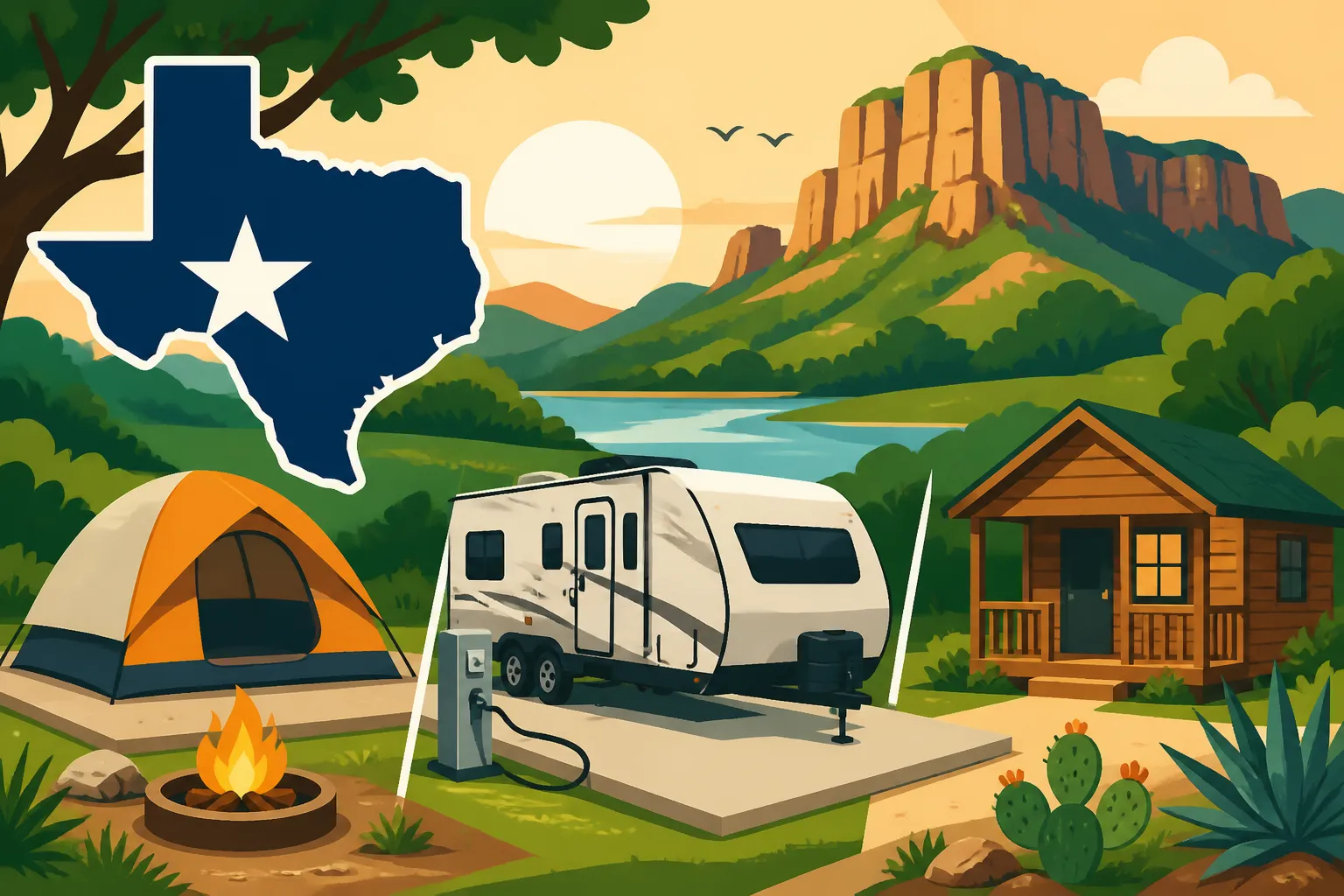
According to Texas Parks & Wildlife Department, tent pads and RV sites are available choices in Texas state parks. Texas Parks & Wildlife Department also identifies a wide variety of overnight lodging besides camping at state parks, state natural areas and state historic sites. For overnight visitors choosing among the options, Texas Parks & Wildlife Department lists screened shelters, cabins or campsites.
| Stay type | A good starting point if you… | Details to check |
|---|---|---|
| Tent campsite | Want to sleep in your own tent | Whether the specific site has a tent pad, what services it offers, and whether tents are allowed there |
| Primitive campsite | Want a simpler site and can plan around fewer services | What is provided, how you reach the site, and what you must bring |
| Water-only campsite | Want water at the site but do not need electrical service | The exact site listing, layout and any limits on vehicles or tents |
| Water-and-electric campsite | Want water and electricity while camping | Electrical amperage, hookup placement, site layout and tent or RV rules |
| Full-hookup campsite | Want water, electricity and sewer at the site | RV dimensions, drive length, hookups, layout and occupancy limits |
| Screened shelter | Want a roofed, screened space rather than a conventional tent site | Sleeping setup, available amenities, what to bring and whether a tent is permitted |
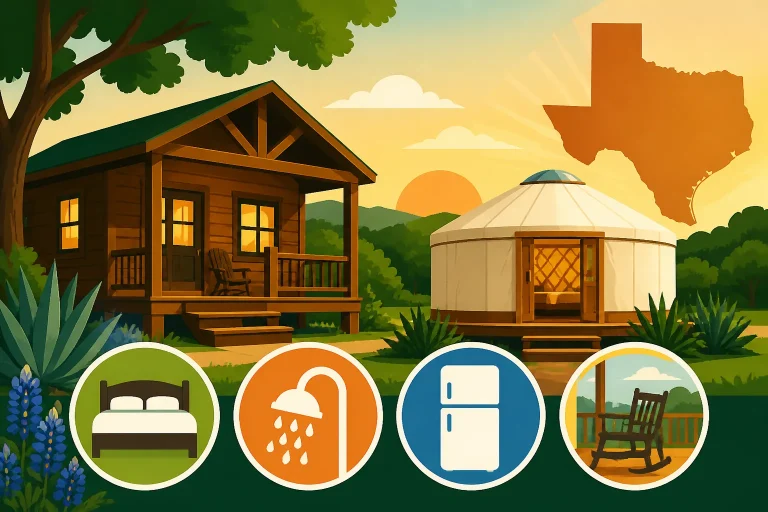
| Cabin | Prefer indoor lodging over bringing a tent or RV | Sleeping arrangements, bathroom and kitchen details, supplies, house rules and booking conditions |
Treat the table as a way to sort your questions, not as a promise that every park has every type of stay. A site name can help you identify a category, but the detailed listing is what matters for a particular reservation. Amenities, layout and restrictions can differ from one park or campsite to another.
For a first visit, it can help to decide what would make the trip comfortable rather than simply choosing the most equipped option. A tent camper who is happy without hookups may not need an RV-style site. Someone arriving in an RV may care more about the pad, vehicle fit and utility connections than about a tent pad. A traveler who wants to avoid bringing sleeping gear may find a shelter or cabin more suitable, but should still check what furnishings and supplies are included.
If you are choosing between sleeping under your own tent and renting a roofed space, Cabin or Campsite for a First Family Trip to a Texas State Park? can help frame the trade-offs. For an overview of overnight choices beyond tent sites, see Camping in Texas State Parks: Tent Pads, Hookup Sites and Cabins—but use the park’s current listing to verify the details for the place you plan to visit.
Campsites: tent pads, primitive sites and basic services
A campsite is not a single standard setup. Texas Parks & Wildlife Department lists primitive sites, water-only sites, water-and-electric sites, and full-hookup sites with water, electricity and sewer; availability varies by park and campsite. That range makes the site listing important: a broad category can tell you what kind of service to expect, but it cannot answer every practical question about the space you are considering.
A tent pad is useful when you plan to sleep in a tent, but do not assume every site is designed for the same tent arrangement. Look for the site’s specific rules and description. Check where the pad is in relation to the parking space, table or other listed features, and make sure the site’s layout works for the tent and gear you intend to bring. If you are comparing tent sites, Where Your Tent Goes on a Drive-Up Campsite explains why the placement of the tent area is worth checking rather than assuming.
Primitive camping is a category worth reading carefully. The name alone does not tell you what is at the site, how far it is from parking, or which supplies you will need. Check the park’s description for the access route, water information, restroom details and any instructions for reaching the campsite. If the site is not close to your vehicle, you may need to carry more of your equipment and plan the walk as part of your trip. Primitive Campsites in Texas State Parks: Fees, Hikes, No Hookups and Choosing a Texas State Park Campsite: Drive-Up, Walk-In or Hike-In offer useful ways to think about those differences.
Water-only sites can suit people who want water available but do not require power at the campsite. Water-and-electric sites add electrical service, but the site’s amperage and hookup location still matter. A description that says “electric” is not enough on its own to determine whether a connection fits your RV or equipment. Review the full listing and match it against the needs of the devices you plan to use.
The same caution applies to a site advertised as full hookup. The category indicates water, electricity and sewer, but it does not establish that the site will fit every RV or that its utility connections are arranged the way you expect. Check drive length, RV length, electrical amperage, hookup placement, site layout and any restrictions on tents or occupancy. For a closer look at hookup categories and what to compare, see Full Hookup Versus Water and Electric: Which an RV Really Needs and Electric Campsites Explained: Amps, Water and Tents at State Parks.
A comfortable campsite is not always the one with the longest amenity list. A simpler site may be a better fit if you want to travel light and do not need electricity. Conversely, paying for a site with services you do not use may not make sense for your trip. Consider the gear you already own, how long you expect to be at camp, whether you need to recharge devices, and how much setup you want to manage. These are planning questions, not reasons to assume that one category is universally better.
Before settling on a site, make a small checklist:
- Does the site allow the kind of sleeping setup you plan to use?
- Is the parking and access arrangement suitable for your vehicle?
- Does the site provide the utilities you actually need?
- Can your tent, RV and other equipment fit within its stated limits?
- Are the listed restroom, water and other facilities appropriate for your group?
- Are there any restrictions in the listing that would change your plan?
When comparing parks, keep the exact site description with your notes. Similar labels can hide meaningful differences in space, access or amenities. If something important is unclear, confirm it with the park through its official information before you make the trip.
RV campsites: match the vehicle to the site
An RV site should be chosen by its dimensions and setup, not just by the fact that it is labeled for RV use. Texas Parks & Wildlife Department states the registration allowance as one recreational vehicle (RV) allowed to be registered per non-group campsite. The same department advises campers to check the specific site’s maximum RV or vehicle length, drive length, electrical amperage, hookup placement, layout, and any RV, tent or occupancy limits before booking.
Those details answer different questions. Maximum RV or vehicle length concerns whether your rig is within the stated limit. Drive length concerns the usable space for getting into or parking at the site. Hookup placement matters because a connection may be on a side of the rig that is awkward for your setup. Electrical amperage helps you determine whether the site’s service matches the equipment you plan to run. Layout affects maneuvering, parking and how you will use the campsite once you arrive.
Do not rely on the overall park description to judge whether a particular site will fit. Compare the site’s listing with your RV’s actual dimensions and setup. If you tow a vehicle or trailer, check how the listing treats vehicle and trailer arrangements rather than assuming the campsite will have room for every part of the combination. A long RV may fit the maximum length but still be difficult to position if the drive or turning space does not suit it.
It is also worth checking whether the site permits a tent alongside the RV. Some travelers bring a small tent for children or extra sleeping space, but a site’s RV designation does not automatically confirm that a separate tent is allowed. The same goes for extra vehicles, occupancy and equipment. Check the stated limits before making plans around a particular arrangement. The related article Extra Tents Beside an RV on a Texas State Park Full-Hookup Site focuses on that specific question.
If the site offers water and electricity but not sewer, think through where and how you will manage wastewater during the stay. If it offers a full hookup, check whether the connection points suit your RV before you assume setup will be straightforward. To compare campground descriptions and utility terms, Sewer Hookup or Dump Station? Reading a State Park Site Listing may help you identify what the listing is actually describing.
A practical RV comparison can include the following:
- Vehicle fit: Compare the listed length limit with the RV or vehicle you intend to bring.
- Approach and parking: Read the drive-length and layout information, and consider whether you can maneuver into the space.
- Power: Match the listed amperage to the requirements of your RV and equipment.
- Connections: Check hookup locations against the connection points on your vehicle.
- Sleeping arrangement: Confirm whether a tent or other additional setup is allowed.
- Group and vehicle details: Review occupancy and vehicle limits rather than assuming there is space for every guest or car.
If you are new to RV camping, choosing a site with the right utility category is only part of the decision. You may also want to consider how much setup you are comfortable handling, whether your RV is easy to maneuver, and how much space you need outside the vehicle. For an overview of arrival and setup considerations, see Arriving at a Texas State Park in an RV: Parking, Pads and Check-In. If you are still deciding whether you need sewer at your site, Is a Full-Hookup Site Worth It to Skip the Dump Station Line? can help you think through the convenience trade-off without treating it as a requirement.
It is sensible to verify the reservation details close to departure, especially if your vehicle, equipment or group plan has changed. A campsite that suited an earlier setup may not suit a larger rig or an added tent. Keep the site information available while packing so that you can catch a mismatch before you arrive.
Screened shelters and cabins: a roof without an RV site
A screened shelter or cabin can be a good alternative when you want more protection from the elements or prefer not to sleep in a tent. Texas Parks & Wildlife Department says overnight visitors can choose among screened shelters, cabins or campsites. These are different kinds of stays, however, and the category name does not tell you everything about what will be inside.
A screened shelter is not automatically a cabin. Check its description to see what kind of sleeping space and furnishings are provided, whether the sides are screened or enclosed, and what amenities are available. Find out whether you need to bring sleeping pads, bedding, cooking gear, lighting or other supplies. If you hope to pitch a tent beside the shelter, verify that the specific site allows it instead of relying on the word “shelter.” Screened Shelter, Cabin or Yurt: Picking a Roof at a Texas State Park can help you compare the general types of covered stays.
Cabins vary too. Before booking, check the sleeping arrangements, occupancy, bathroom details, kitchen facilities, heating or cooling information if it matters to you, and the items guests are expected to bring. Do not assume that every cabin has a private bathroom, a full kitchen, cookware or linens. Those features need to be confirmed in the individual lodging description. For a targeted checklist, see Linens and Cookware: What Texas State Park Lodging Doesn’t Supply and Cabins With Kitchens and Private Bathrooms in Texas State Parks.
The difference in packing can be substantial. A campsite may mean bringing a tent and the gear needed to sleep outdoors. A shelter may reduce some exposure while still requiring bedding and camp equipment. A cabin can offer an indoor room, but may still require guests to bring supplies for sleeping, cooking or cleaning. The listing tells you what is included; your packing plan should fill the gaps rather than assume that the room is fully equipped.
Think about how you will use the space, too. If your group will spend most of its time outdoors, a basic shelter may provide the cover you want without the expense or features of a cabin. If you need an indoor place to sleep or want to travel without camping equipment, a cabin could be the better fit. If different members of your group have different needs, compare the lodging’s capacity and layout with the actual sleeping plan, not just the number of people in your party.
Pet policies, extra guests, smoking rules, check-in details and deposits can also affect a lodging choice. These are not safe to infer from a cabin or shelter label. Read the property-specific terms before booking and again before departure if the plan depends on a particular rule. The articles Pets in Texas State Park Lodging: Cabins, Yurts and Shelters and Cabin House Rules in Texas State Parks: Pets, Tents and Smoking address common questions that can shape lodging decisions.
For a broader comparison of covered lodging and larger facilities, see Cabins and Yurts in Texas State Parks: What the Rooms Include and Group Camps, Lodges and Halls Across Texas State Parks. A room, shelter or group facility may solve a different problem from a campsite, so compare the actual setup and rules rather than choosing by name alone.
Choose a site that fits your group and trip style
The right stay is a balance between comfort, cost, gear and how you want to spend time at the park. A tent site can keep the trip centered on camping, but it requires the equipment and setup that go with sleeping outdoors. An RV site may simplify sleeping and storage, while adding questions about vehicle fit and utility connections. A screened shelter or cabin can reduce some of the gear you carry, but you need to confirm what the lodging includes.
Start with the people who are traveling. Consider who will share sleeping space, whether anyone needs a particular bathroom or access arrangement, and how much privacy the group expects. A booking that appears adequate by headcount may not fit the way everyone plans to sleep. Check occupancy and sleeping arrangements in the site or lodging description. If accessibility is important, review the actual facility information and the park’s accessibility details rather than assuming a type of campsite is suitable. Accessibility at Texas State Parks: Campsites, Cabins and Restrooms can help you identify questions to ask.
Then consider equipment. Make a list of what you already own and what you would need to borrow, rent or buy for each option. A tent stay may need a tent, sleeping system, lighting and cooking supplies. An RV trip has its own equipment and connection requirements. A cabin may reduce the need to carry sleeping gear, but the included furnishings and kitchen supplies are property-specific. Compare the complete plan, not just the headline site type.
The duration and rhythm of the trip also matter. If you plan to spend most of the time hiking, swimming or exploring, the campsite may mainly be a place to sleep and store gear. If you expect to cook, relax at camp or stay close to the site, a table, shade, hookups or indoor space may carry more weight. Check the site’s features against your likely use rather than treating every listed amenity as equally valuable.
For families or mixed groups, compare nearby arrangements without assuming that everyone needs the same type of overnight stay. One part of the party may prefer an RV while another prefers a tent or cabin, but each booking must be suitable on its own. Confirm where the sites are, what each one permits and whether all guests can use the planned arrangement. Splitting a Big Group Between a Cabin and Nearby Campsites offers ideas for thinking through a mixed setup.
Cost is another part of the comparison, but it is not captured by the site name alone. Entry charges, campsite charges, lodging charges, taxes and other possible costs can depend on the specific park, site and reservation. Check the current fee details with the official park information and do not assume that a booking total includes every part of the visit. For help understanding the different charges, see What a Texas State Park Trip Costs, From the Gate to the Campsite and Reading a Texas State Park Fee Table: Daily Entry, Facility, Extras.
A simple decision process can keep the choice manageable:
- Decide whether you want to sleep in your own tent, in an RV, in a screened shelter or in a cabin.
- List the services and amenities you genuinely need.
- Check the exact site or lodging description for layout, fit, restrictions and what is provided.
- Compare the total trip plan, including supplies, access and any charges shown by the park.
- Keep a backup option in mind if your preferred type of stay is unavailable or does not fit your needs.
The best choice is the one that works for your equipment and group, not necessarily the one with the most services. A little time spent checking the details can prevent an uncomfortable surprise, such as a tent that cannot be placed as planned, an RV connection that does not match your setup, or a cabin that lacks supplies you expected.
Check the listing and plan the arrival
Once you know what kind of stay you want, use the official park information to compare the specific options. Start with the site or lodging description rather than relying on general campground labels. Read the listed amenities, limits and instructions carefully, and save the details you may need while packing or traveling.
For campsites, verify the site type and the services listed for that particular campsite. For an RV, compare length, drive space, electrical amperage, hookup placement and layout with your vehicle. For a tent, confirm that the site supports the intended setup. For a shelter or cabin, check the sleeping arrangement, furnishings, supplies, occupancy and house rules. These checks are especially useful when you are choosing a site because it appears to have a feature that matters to your group.
If information is unclear, seek clarification from the park through its official channels before relying on an assumption. This is particularly important when the answer could affect whether your equipment fits, whether you can sleep as planned, or whether an extra vehicle or tent is allowed. Keep the answer or listing information available so everyone in the group understands the plan.
Availability and booking conditions can also shape the decision. Review the reservation details for the park and the exact dates you want, including any requirements or cancellation terms presented during booking. Do not treat a search result, old note or a similar site description as confirmation that your chosen option is available. Booking Texas State Park Campsites and Cabins Months Out explains why planning ahead can matter, while Texas State Parks Online Reservations: How the Booking System Works provides a broader overview of the booking process.
Before leaving, check for park alerts and any changes that could affect access or the overnight stay. Park conditions and availability can change, and trip plans may need to adjust. Park Alerts and Closures: Checking Before You Leave Home is a useful reminder to verify the information close to departure. If your destination is remote or you expect limited phone service, download or save the park map and reservation details in advance; Downloading a Park Map Before Losing Signal at a Texas State Park covers that preparation.
Pack according to the actual listing. For a tent site, bring the equipment needed to sleep and manage meals. For an RV site, bring compatible connections and supplies for the services available there. For a screened shelter or cabin, pack any bedding, cookware, lighting or other items the listing does not provide. A checklist based on the site’s details is more reliable than a generic camping list.
On arrival, follow the park’s check-in directions and use the designated site assigned to your reservation. Take a moment to compare the space with your plan before unloading everything. If the site appears inconsistent with the reservation or an essential feature is unavailable, contact park staff through the official process rather than making an unauthorized change to your setup.
A final pre-departure review can be brief:
- Confirm the park, site or lodging type and reservation details.
- Recheck vehicle dimensions, hookups and tent rules if bringing camping equipment.
- Review the listed amenities and pack missing supplies.
- Check park alerts and travel information.
- Save directions, reservation details and a map where you can access them.
Careful checking is not about making the trip complicated. It is a way to make sure the site you chose matches the stay you are actually prepared to have.
Frequently Asked Questions
Do all Texas state parks have the same camping options?
No. Options vary by park and campsite. Check the specific park and site listing to see what is available and what each site provides.
Does a site labeled for RVs automatically fit my vehicle?
No. Compare your RV or vehicle dimensions with the maximum length, drive length and site layout, and check the hookup details and stated limits before booking.
Are cabins fully equipped for sleeping and cooking?
Do not assume so. Cabin furnishings and supplies can differ, so check the lodging description for sleeping arrangements, kitchen equipment, linens and other items you may need.
Can I pitch a tent beside a screened shelter or RV?
That depends on the specific site’s rules. Confirm tent permissions and any occupancy or equipment limits in the official listing before planning the setup.
Sources
- Texas Parks & Wildlife Department — Campsites — Texas Parks & Wildlife Department (checked November 22, 2026)
- Texas Parks & Wildlife Department — Activities — Texas Parks & Wildlife Department (checked November 22, 2026)
- Texas Parks & Wildlife Department — Lodging — Texas Parks & Wildlife Department (checked November 22, 2026)
- Texas Parks & Wildlife Department — Vehicle Type Guidelines (checked November 22, 2026)
- Texas Parks & Wildlife Department — Garner State Park — Texas Parks & Wildlife Department (checked November 23, 2026)
Disclaimer
This article is for general informational purposes only and does not constitute professional advice. Laws, prices and regulations vary by location and change over time. Consult a qualified professional for guidance on your specific situation. Texas Camping & RV is not a government agency and is not affiliated with any government agency.